A Tiny Scratch, Big Trouble?
A tiny ear scratch can lead to big trouble—especially if you have uncontrolled diabetes. In this easy-to-follow guide, We break down the warning signs, and how to protect your ears the smart way. Simple, clear, and packed with practical ENT advice!
Dr Anagha Deshmukh, Dr Ashmita A. T.
5/18/20253 min read
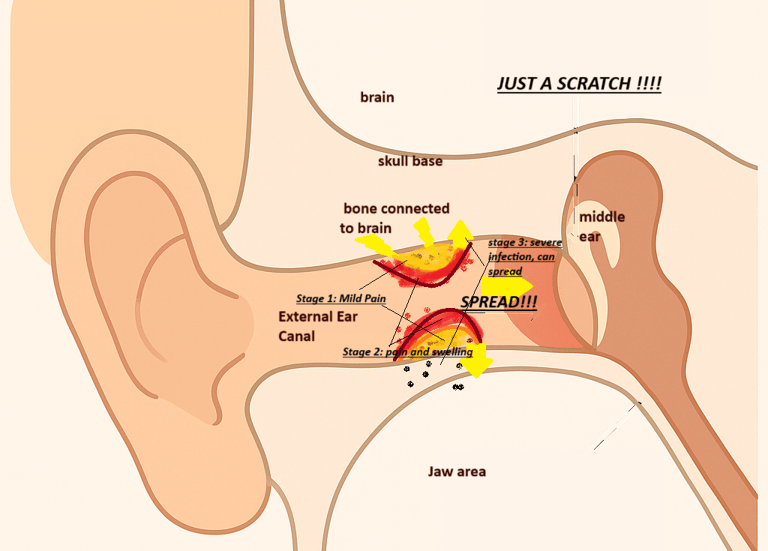

Have you ever scratched your ear, maybe with a cotton bud or just your finger, and then felt a nagging pain later? For most people, that’s where it ends. But for some—especially those with uncontrolled diabetes—that tiny scratch can open the door to a much more serious ear infection.
This blog isn’t here to scare you. It’s here to help you spot the signs early, understand why this condition sounds scarier than it is, and know exactly when to see a doctor. Let’s walk through it together, in simple terms!
The most commonly asked question in my clinic is that:
"Doctor, my eardrum is ok, which means it's not a big problem, right?"
Here is the truth, this infection is not just about reduced hearing or ruptured ear drums. this can spread through the bone and infect the surrounding nerves. Hence it is a big deal and timely action and proper care is very important.
1. Why the Scary Name?
It’s not cancer but still, Doctors say, “malignant” because the infection can behave aggressively if we ignore it.
Where it starts: the thin skin of your outer ear canal—the bit you can just reach with a cotton bud (please don’t!).
The biggest risk group: is people with poorly controlled diabetes or weak immune systems (think of the body’s security guards being on a tea break).
2. How a Simple Scratch Snowballs:
Scratch/irritation—a fingernail, ear‑bud, or itchy eczema damages the skin. (learn tips on : "how to keep your ears clean"
Germs move in – your ear is warm, slightly moist, and full of tiny nooks. Perfect microbe Airbnb!
Swelling & pain—the canal feels blocked; pain may creep to the jaw or temple, especially at night.
If sugars stay high – healing stalls, infection digs deeper into the bone around the ear.
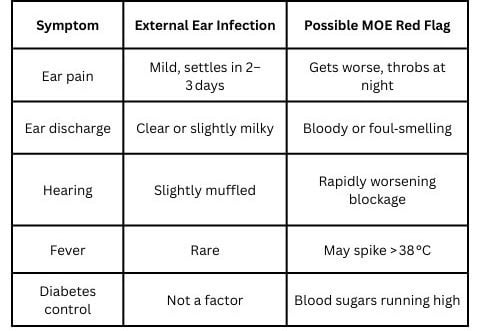
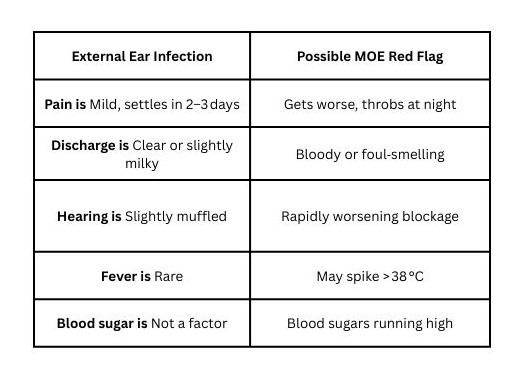
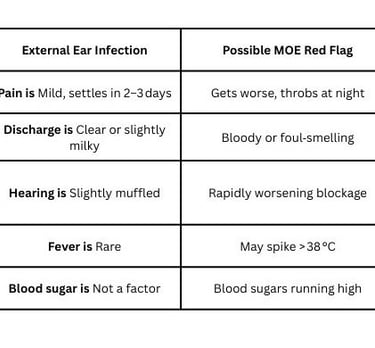
Spot It early checklist
"डॉक्टर, मेरे कान का परदा ठीक है, इसका मतलब यह कोई बड़ी समस्या नहीं है, है ना?
"डॉक्टर, ही समस्या बाहेरून आहे आणि माझ्या कानाचा पडदा चांगला आहे, म्हणजे काळजी करण्याचे कारण नाही, बरोबर?"
🚩 See a doctor fast if two or more red flags show up, or pain wakes you from sleep.
4. Why Diabetes Makes It Tricky
High sugar = germ buffet. Bacteria thrive and multiply faster.
Delayed healing. Imagine trying to plaster a wall while the cement never sets.
Acid balance shifts. Earwax normally keeps the canal slightly acidic (germ‑unfriendly). High sugars tip that balance.
5. Treatment—What to Expect
Ear swab to identify the exact bug (usually Pseudomonas).
Targeted antibiotics – often strong eardrops and tablets, sometimes IV meds.
Strict sugar control – monitor glucose like a hawk.
No water inside – keep the canal dry; use a shower cap or ear‑plug of cotton + Vaseline.
Follow‑up scans (CT/MRI) if pain or discharge persists > 2 weeks.
👉 Good news: Caught early, MOE is beatable. Late cases need longer (4–6 weeks) antibiotics but still recover well.
6. Simple Ways to Dodge the Bullet
Hands off! No cotton buds, hairpins, or keys (yes, we’ve seen it). Your ear is self‑cleaning.
Keep diabetes in check. Test, track, tweak diet/meds.
Dry those ears. After swimming, tilt head & dab outer ear—no digging.
Treat small infections early. Never ignore persistent itch or pain.
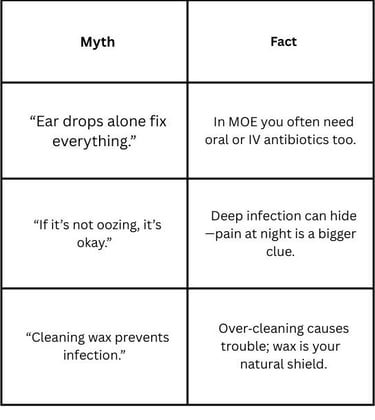
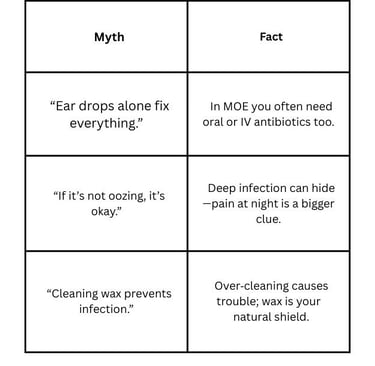
7. Myth‑Busters
Key Takeaway
A harmless‑looking ear scratch can turn nasty in people with uncontrolled diabetes—but only if we let it. Listen to your ears, keep sugars steady, and seek help early. Your hearing (and your peace of mind) will thank you!